
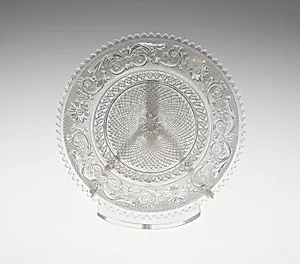
Plate
c. 1830/60
Medium
Glass; pressed and cut
Dimensions
2 × 17.8 cm (3/4 × 7 in.)
Classification
plate (general, dish)
Department
Applied Arts of Europe
Museum
Art Institute of Chicago
Accession Number
17156
Rights
Public Domain
Art Historical Context
This elegant plate from Baccarat Glass, dating to around 1830–1860, exemplifies the pinnacle of 19th-century French glassmaking innovation. Produced by the renowned Baccarat manufactory—founded in 1764 and celebrated for its luxurious tableware—this small dish (just 7 inches in diameter and inch high) was designed for both practical use and aesthetic delight in European households. Crafted from glass using pressed and cut techniques, the plate highlights a revolutionary industrial process. Pressing allowed for the rapid, precise molding of intricate patterns, democratizing ornate designs previously reserved for hand-blown luxury items. The subsequent cutting—faceting the surface by hand—created a dazzling play of light, enhancing its brilliance and reflecting Baccarat's mastery in blending machine efficiency with artisanal finesse. Housed in the Art Institute of Chicago's Department of Applied Arts of Europe, this piece captures the era's fusion of functionality and opulence, emblematic of the Industrial Revolution's impact on decorative arts. Visitors will appreciate its subtle sparkle, a testament to Baccarat's enduring legacy in elevating everyday objects to art.
About the Artist
Baccarat Glassworks
Baccarat Glassworks, founded in 1764 in the Lorraine village of Baccarat, France, emerged from a royal decree by King Louis XV granting Bishop Monseigneur de Montmorency-Laval permission to establish a glass factory. Leveraging abundant local driftwood from the Vosges forest and skilled craftsmen, the works initially produced soda glass for windows, mirrors, and everyday stemware, employing thousa...