
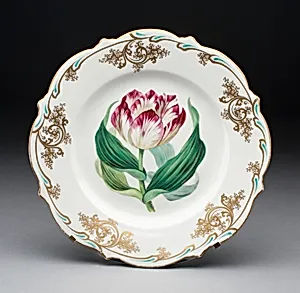
Plate
c. 1825
Medium
Porcelain, polychrome enamels and gilding
Dimensions
2.5 × 23.5 cm (1 × 9 1/4 in.)
Classification
plate (general, dish)
Department
Applied Arts of Europe
Museum
Art Institute of Chicago
Accession Number
48710
Rights
Public Domain
Art Historical Context
This elegant porcelain plate, crafted around 1825 by Spode Limited, exemplifies the refined taste of early nineteenth-century European dining culture. Produced in England during the height of the Regency period, the piece reflects the growing demand for luxurious yet functional tableware among the emerging middle and upper classes. Spode Limited was celebrated for advancing English porcelain production, creating durable, finely finished wares that rivaled imported Asian ceramics while incorporating distinctly British design sensibilities. The plate’s medium—porcelain decorated with polychrome enamels and gilding—highlights the technical sophistication of the era. Multiple layers of vibrant enamels allowed for rich, colorful motifs, while delicate gold accents added a sense of opulence suitable for formal entertaining. At just one inch high and just over nine inches across, this compact form was likely intended for dessert or display, blending everyday utility with artistic display. As part of the Applied Arts of Europe collection at the Art Institute of Chicago, the plate offers visitors a glimpse into the Industrial Revolution’s impact on decorative arts, when innovative factories like Spode made high-quality porcelain more widely accessible without sacrificing beauty or craftsmanship.
About the Artist
Spode Limited
**Spode Limited** is an iconic English brand of pottery and homewares headquartered in Stoke-on-Trent, England, renowned for its contributions to the Industrial Revolution-era ceramics industry. Founded by Josiah Spode (1733–1797) in 1770, the company traces its roots to the purchase of works in 1776 on Church Street in Stoke. Josiah Spode, who had apprenticed under the prominent potter Thomas Whi...