
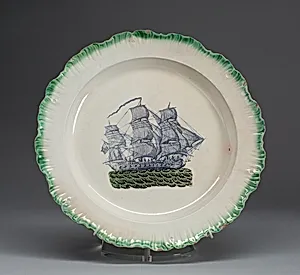
Plate
c. 1780–1810
Medium
Creamware
Dimensions
Diam.: 24.9 cm (9 13/16 in.)
Classification
plate (general, dish)
Department
Arts of the Americas
Museum
Art Institute of Chicago
Accession Number
90613
Rights
Public Domain
Art Historical Context
This elegant creamware plate, dating from around 1780 to 1810, exemplifies refined yet accessible tableware that graced households across the Americas during the colonial and early federal periods. Measuring nearly 10 inches in diameter, its smooth, creamy glaze—achieved through a lead-based formula fired at low temperatures—mimicked the luxury of porcelain at a fraction of the cost. Produced likely in English potteries like those of Josiah Wedgwood, creamware became a staple export, symbolizing transatlantic trade and the democratization of fine dining. In the context of Arts of the Americas, this unadorned dish reflects everyday material culture amid revolutionary change. As the United States emerged as a nation, such plates filled homes from Philadelphia parlors to Southern plantations, blending British craftsmanship with New World aspirations. Its simple form highlights creamware's versatility: durable for daily use yet sophisticated enough for special occasions. Though the artist remains unknown, the plate's understated beauty underscores the era's shift toward functional elegance, making high-style ceramics available to a broader audience and bridging Old World traditions with emerging American identities. A quiet testament to global exchange on display at the Art Institute of Chicago.
About the Artist
Unknown
The artist designated as "Unknown" in our virtual museum's collection exemplifies a poignant chapter in art history: creators whose identities have faded into obscurity despite the enduring power of their work. With only one known artwork attributed to them in our holdings, this figure represents countless anonymous hands that shaped visual culture across centuries. Museums worldwide, including th...