
Plate (part of a set)
Unknown Artist
ca. 1810
Medium
Lustreware
Dimensions
7 3/8 in. (18.7 cm)
Classification
Ceramics-Pottery
Culture
French, Sarreguemines
Department
European Sculpture and Decorative Arts
Museum
Metropolitan Museum of Art, New York, NY
Credit
Gift of Sidney H. and Helen M. Witty, 1964
Accession Number
64.173.70
Rights
Public Domain
Art Historical Context
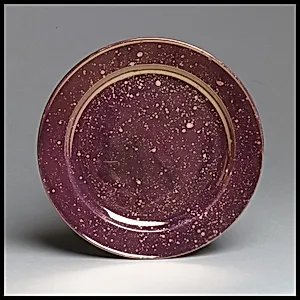
This elegant plate, part of a larger set crafted around 1810 in Sarreguemines, France, exemplifies the region's renowned ceramic tradition. Produced at a time when Napoleonic France fostered industrial innovation, Sarreguemines manufactories like Utzschneider specialized in durable faience pottery, blending functionality with decorative flair. Measuring just 7⅜ inches in diameter, this piece would have graced bourgeois dining tables, showcasing everyday luxury. The standout feature is its lustreware medium—a technique involving metallic oxides fired over a glazed surface to create a shimmering, iridescent sheen reminiscent of precious metals. Revived in early 19th-century Europe from ancient Islamic origins, this method added an opulent, jewel-like glow to humble earthenware, making fine dining accessible to the rising middle class. Though the artist remains unknown, the plate reflects the precision and artistry of Sarreguemines' workshops, which exported wares across Europe. Today, this gift to The Metropolitan Museum of Art from Sidney H. and Helen M. Witty in 1964 invites us to appreciate how ceramics bridged art and utility, capturing the era's blend of tradition and technical prowess. A subtle survivor of domestic life, it glows with historical charm.