
Plate (part of a set)
Unknown Artist
ca. 1810
Medium
Lustreware
Dimensions
7 3/8 in. (18.7 cm)
Classification
Ceramics-Pottery
Culture
French, Sarreguemines
Department
European Sculpture and Decorative Arts
Museum
Metropolitan Museum of Art, New York, NY
Credit
Gift of Sidney H. and Helen M. Witty, 1964
Accession Number
64.173.72
Rights
Public Domain
Art Historical Context
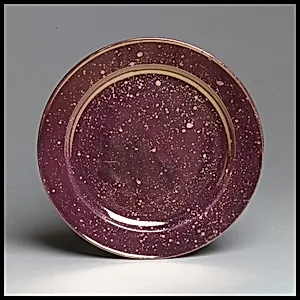
This elegant lustreware plate, around 1810 in Sarreguemines, France exemplifies the refined ceramics produced at this renowned center of faience manufacturing. Measuring 7 3/8 inches in diameter, it forms part of a larger set, likely intended for sophisticated table service in bourgeois households during the Napoleonic era. Sarreguemines, in the Lorraine region near the German border, was a hub for pottery innovation, blending French elegance with influences from neighboring traditions. The standout feature is its lustreware medium—a dazzling technique where metallic oxides, like silver or copper, are applied over a glazed surface and fired in a reducing atmosphere to create an iridescent, mirror-like sheen. Popularized in Europe from the late 18th century, this method evoked the opulence of ancient Islamic and Renaissance ceramics, making everyday objects feel luxurious. Here, the subtle metallic glow would have caught the light beautifully during formal dinners, highlighting the era's neoclassical tastes. Now housed in the Metropolitan Museum of Art's European Sculpture and Decorative Arts Department—thanks to a 1964 gift from Sidney H. and Helen M. Witty—this plate offers a glimpse into early 19th-century French domestic artistry, where functionality met artistic flair.