
Plate (part of a set)
Unknown Artist
ca. 1810
Medium
Lustreware
Dimensions
7 3/8 in. (18.7 cm)
Classification
Ceramics-Pottery
Culture
French, Sarreguemines
Department
European Sculpture and Decorative Arts
Museum
Metropolitan Museum of Art, New York, NY
Credit
Gift of Sidney H. and Helen M. Witty, 1964
Accession Number
64.173.73
Rights
Public Domain
Art Historical Context
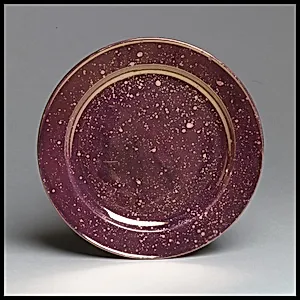
This elegant plate, part of a matching set crafted around 1810 in Sarreguemines, France exemplifies the allure of lustreware ceramics. Measuring 7 3/8 inches (18.7 cm) in diameter, it features a shimmering, iridescent metallic glaze—a technique where metal oxides are fired onto the glazed surface to produce rainbow-like effects. Popularized in Europe during the early 19th century,reware drew inspiration from ancient Islamic and Renaissance Spanish traditions, blending functionality with opulent decoration for dining services. Sarreguemines, in northeastern France near the German border, emerged as a hub for innovative pottery production during the Napoleonic era. Factories there, like those of Utzschneider & Co., specialized in mass-producing high-quality earthenware with colorful glazes and motifs suited to bourgeois homes. This plate reflects the period's neoclassical tastes, where everyday objects became canvases for subtle luxury, bridging utility and artistry in European decorative arts. Today, housed in the Metropolitan Museum of Art's Department of European Sculpture and Decorative Arts as a 1964 gift from Sidney H. and Helen M. Witty, it invites us to admire the enduring craftsmanship of French potters. Imagine it gracing a Regency-era table, its luster catching candlelight!