
Plate (piatto)
Unknown Artist
1508
Medium
Maiolica (tin-glazed earthenware)
Dimensions
Diameter: 10 13/16 in. (27.4 cm)
Classification
Ceramics-Pottery
Culture
Italian, possibly Cafaggiolo
Department
Robert Lehman Collection
Museum
Metropolitan Museum of Art, New York, NY
Credit
Robert Lehman Collection, 1975
Accession Number
1975.1.1024
Rights
Public Domain
Tags
Art Historical Context
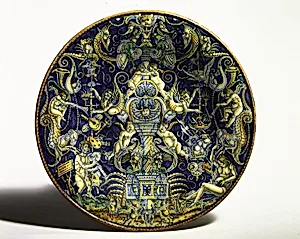
This exquisite maiolica plate, crafted around 1508 in Italy—possibly from the renowned Cafaggiolo workshops in Tuscany—exemplifies the Renaissance mastery of tin-glazed earthen. Maiolica's secret lay in its white tin glaze, which created a luminous canvas for vibrant, multicolored overglaze paints fired at low temperatures, allowing intricate designs that mimicked fine painting. At just over 10 inches in diameter this piatti was likely a luxurious tableware item for elite households, blending utility with artistry. The central motifs—playful female nudes, mischievous satyrs, and chubby putti—draw from classical mythology, evoking the exuberant spirit of Renaissance humanism. These figures frolic in a whimsical scene, reflecting the era's fascination with antiquity and sensual beauty, popularized by artists like Raphael and Michelangelo. Cafaggiolo maiolica, at its peak in the early 16th century, was prized for such lively "istoriato" (history-painted) decorations, rivaling panel paintings in detail and narrative flair. Now part of the Robert Lehman Collection at The Metropolitan Museum of Art since 1975, this anonymous masterpiece offers a window into Italy's ceramic golden age, where workshops like Cafaggiolo exported luxury goods across Europe, fueling cultural exchange and artistic innovation.