
Roundel (tondo)
ca. 1510–20
Medium
Maiolica (tin-glazed earthenware)
Dimensions
Diameter: 8 3/4 in. (22.2 cm)
Classification
Ceramics-Pottery
Culture
Italian, Castel Durante
Department
Robert Lehman Collection
Museum
Metropolitan Museum of Art, New York, NY
Credit
Robert Lehman Collection, 1975
Accession Number
1975.1.1025
Rights
Public Domain
Tags
Art Historical Context
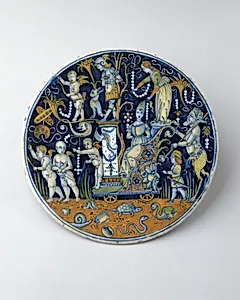
This charming *Roundel* (tondo), produced in the workshop of Giovanni Maria Vasaro around 1510–20, hails from Castel Durante (modern Urbania), a thriving hub of Italian Renaissance maiolica production. Crafted from tin-glazed earthenware, this 8¾-inch-diameter disk showcases vibrant scenes populated by women, Cupid, playful putti (cherubic figures), mischievous satyrs, and fantastical elements like frogs, snails, snakes and turtles drawing chariots. These motifs blend mythology, nature, and whimsy, evoking the grotesque style popular in decorative arts of the period. Maiolica's tin-glaze technique created a smooth, white surface ideal for bold polychrome painting, allowing artists like those in Vasaro's workshop to achieve luminous colors and intricate details that mimicked luxury painting or metalwork. Castel Durante workshops rivaled those in Deruta and Gubbio, exporting pieces across Europe and elevating ceramics from utilitarian objects to prized collector's items. Vasaro, a master istoriato painter known for narrative scenes, influenced this lively composition, reflecting humanism's delight in classical themes and the natural world. Today, housed in the Robert Lehman Collection at The Metropolitan Museum of Art, this tondo captures the exuberance of early Cinquecento Italian pottery—functional yet artistic, it invites viewers to ponder love, fantasy, and the Renaissance revival of antiquity through its joyful, teeming imagery.