
Plate with two lovers
dated 1644
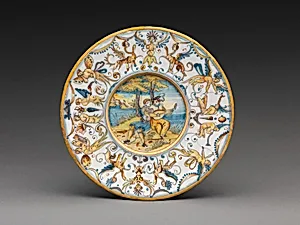
Medium
Faïence (tin-glazed earthenware)
Dimensions
Overall: 1 × 9 1/4 in. (2.5 × 23.5 cm)
Classification
Ceramics-Pottery
Culture
French, Nevers
Department
European Sculpture and Decorative Arts
Museum
Metropolitan Museum of Art, New York, NY
Credit
n JGift of J. Pierpont Morgan, 1917
Accession Number
17.190.1801
Rights
Public Domain
Tags
Art Historical Context
This charming *Plate with Two Lovers*, created by Antoine Conrade in 1644, exemplifies the vibrant faience tradition of Nevers, France—a major center for tin-glazed earthenware the 17th century Nevers potters, inspired by Italian maiolica techniques introduced via trade routes, mastered the art of applying a white tin-opacified glaze over earthenware. This allowed for brilliant polychrome decorations that mimicked costly porcelain, making luxurious designs accessible to affluent households. At just 1 × 9¼ inches, this delicate plate was likely intended for display rather than daily use, adorning a collector's cabinet or dining table. The central scene features an intimate couple, evoking romantic or courtship themes popular in Baroque-era decorative arts, accompanied by lutes symbolizing music and harmony, and whimsical mythical creatures that add a fantastical flair. Such motifs drew from mythology, folklore, and daily life, reflecting the era's blend of sensuality and imagination amid France's cultural flourishing under Louis XIII and early Louis XIV. Conrade's precise enameling technique highlights the Nevers workshop's skill in narrative storytelling on humble clay. Today, this piece graces the Metropolitan Museum of Art, a gift from J. Pierpont Morgan in 1917, offering a window into 17th-century French craftsmanship and the joy of everyday elegance.