
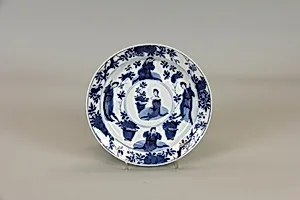
清康熙 景德鎮窯青花仕女花卉紋盤|Plate with women and plants
Unknown Artist
Medium
Porcelain painted in underglaze cobalt blue (Jingdezhen ware)
Dimensions
Diam. 7 7/8 in. (20 cm)
Classification
Ceramics
Culture & Period
China · Qing dynasty (1644–1911), Kangxi period (1662–1722)
Department
Asian Art
Museum
Metropolitan Museum of Art, New York, NY
Credit
Rogers Fund, 1924
Accession Number
24.18.3
Rights
Public Domain
Tags
Art Historical Context
This elegant blue-and-white porcelain plate hails from Jingdezhen, renowned porcelain capital, during the Kangxi period (166–1722) of the Qing dynasty. Measuring 7⅞ inches in diameter, it exemplifies the imperial kilns' mastery at a time when Kangxi porcelain reached new heights of refinement, blending technical innovation with aesthetic grace. Produced under imperial patronage, such wares were prized for both domestic elite use and export, symbolizing China's ceramic supremacy. The plate features delicate underglaze cobalt blue designs of graceful women (仕女, or court ladies) amid blooming flowers, a harmonious motif evoking beauty, prosperity, and harmony with nature—core themes in Chinese art. The cobalt, imported from Persia and fired at high temperatures, yields the vibrant yet subtle blues characteristic of Jingdezhen's blue-and-white (qinghua) tradition. This technique, perfected over centuries, allowed intricate details to emerge vividly through the translucent glaze. As a Rogers Fund acquisition at The Metropolitan Museum of Art, this plate offers a window into 17th-century Chinese culture, where ceramics were not mere vessels but canvases for storytelling and status. Visitors will appreciate its timeless poise, a testament to the Kangxi era's artistic golden age.