
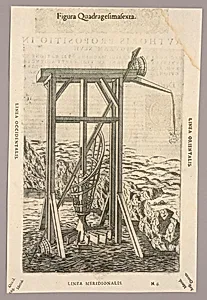
Plate XLVI from Theatrum instrumentorum et machinarum
1582
Classification
Department
Smithsonian Collection
Museum
Smithsonian American Art Museum
Credit
Gift of Mrs. George A. Kubler
Accession Number
1949-152-244
Rights
Public Domain
About this artwork
Research in Progress
Art Historical Context
Step into the inventive world of the Renaissance with *Plate XLVI from Theatrum instrumentorum et machum*, created by Julio Paschale in1582. This print part of a celebrated series housed in the Smithsonian American Art's collection (gift of Mrs. George. Kubler), exemplifies era's fascination with mechanical ingenuity. "Theatrum instrumentorum machinarum"—Latin for "Theater of and Machines"—was a groundbreaking publication that showcased intricate designs for tools, devices, and apparatuses, bridging art and early engineering. Produced during the late 16th century, when the printing press revolutionized knowledge dissemination, Paschale's work reflects the scientific curiosity of figures like Leonardo da Vinci. As a meticulously crafted print, it likely employed engraving techniques to achieve precise, reproducible illustrations, allowing inventors, scholars, and craftsmen across Europe to study and replicate complex machinery. These "theaters of machines" books were cultural milestones, fueling the transition from medieval craftsmanship to the Scientific Revolution. Though research on this specific plate continues, its presence in the Smithsonian underscores its enduring value as a window into Renaissance innovation, where art served science and imagination propelled progress. A testament to human creativity at the dawn of modernity!