
Platter
ca. 1840–ca. 1854
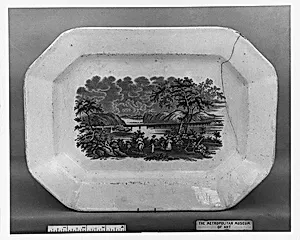
Medium
Earthenware, transfer-printed
Dimensions
12 7/8 x 9 1/2 in. (32.7 x 24.1 cm)
Classification
Platter
Culture
British (American market)
Department
The American Wing
Museum
Metropolitan Museum of Art, New York, NY
Credit
Bequest of Mary Mandeville Johnston, from the collection of Mr. and Mrs. Edward W. S. Johnston, 1914
Accession Number
14.102.93
Rights
Public Domain
Tags
Art Historical Context
This elegant platter, crafted by the British firm William Ridgway & Co. around 1840–1854, exemplifies the height of Staffordshire pottery's influence on American households. Produced specifically for the U.S. market, the 12⅞ × 9½-inch earthenware dish features transfer-printed landscapes, a technique that revolutionized ceramics by allowing intricate designs to be printed from engraved plates onto unglazed clay, then glazed and fired for durability. This method made high-quality decoration affordable, transforming everyday tableware into artistic statements. The vivid landscape motifs—likely evoking romanticized views of nature—captured the era's fascination with the sublime beauty of the American wilderness, blending British craftsmanship with transatlantic tastes. Displayed in The Metropolitan Museum of Art's American Wing, it highlights the 19th-century boom in imported British ceramics, which filled middle-class homes before U.S. potteries fully competed. A bequest from Mary Mandeville Johnston in 1914, this piece whispers of global trade networks and the democratized elegance of Victorian dining.