
Pleasure Quarters
18th–19th century
Medium
Hanging scroll; ink and color on silk
Dimensions
40 x 12 3/16 in. (101.6 x 30.9 cm)
Classification
Paintings
Culture & Period
Japan · Edo period (1615–1868)
Department
Asian Art
Museum
Metropolitan Museum of Art, New York, NY
Credit
Charles Stewart Smith Collection, Gift of Mrs. Charles Stewart Smith, Charles Stewart Smith Jr., and Howard Caswell Smith, in memory of Charles Stewart Smith, 1914
Accession Number
14.76.46
Rights
Public Domain
Tags
Art Historical Context
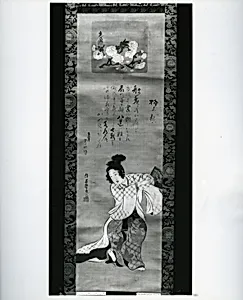
In the Edo period (1615–1868), Japanese artist Suga Mitsusada painted “Pleasure Quarters,” a hanging scroll that evokes the lively yet refined world of urban entertainment districts. Rendered in ink and color on silk, the work depicts women surrounded by floral elements, capturing a sense of elegance and momentary beauty that resonated with viewers of the time. Its modest vertical format—roughly 40 by 12 inches—makes it well suited for intimate display in a Japanese home or study. Hanging scrolls like this one were prized for their portability and seasonal adaptability; they could be rolled away when not in use, preserving the delicate silk surface. Mitsusada’s choice of silk allowed the pigments to sit with a luminous softness, while the combination of ink outlines and subtle color washes highlights both the figures and the surrounding blossoms. Beyond its visual charm, the painting reflects the cultural fascination with pleasure quarters as centers of fashion, music, and refined social interaction. Through its focus on women and flowers, the scroll gently alludes to themes transience and aesthetic appreciation that were central to Edo-period sensibilities.