
Pocketbook
18th century
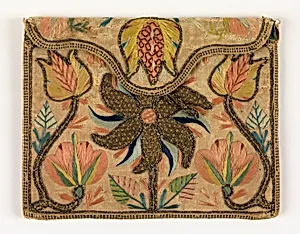
Medium
costume & accessories
Classification
costume & accessories
Department
Smithsonian Collection
Museum
Smithsonian American Art Museum
Credit
Bequest of Marian Hague
Accession Number
1971-50-112
Rights
Public Domain
About this artwork
Research in Progress
Art Historical Context
Step into the elegant world of 18th fashion with this charming *Pocketbook*, a delicate accessory from the Smithsonian American Museum's collection of costume and accessories. Dating to the 1700s, pocketbooks were essential carryalls for women, tucked into pockets or slung over the wrist to hold coins, keys, letters, and small treasures. Crafted during an era of lavish Rococo style and burgeoning consumerism, these items reflected personal taste and social status, often featuring intricate embroidery, silk fabrics, or beadwork that showcased the maker's skill. Though the artist remains unknown—befitting many everyday objects of the time—this pocketbook exemplifies the artistry in functional design. As part of the Smithsonian's holdings, it was generously bequeathed by Marian Hague, preserving a slice of colonial or early American life. Currently under research, it invites us to ponder the hands that stitched it: perhaps a lady's leisure pursuit or a professional craftswoman's trade. In a museum context, such accessories bridge fine art and daily life, highlighting how 18th-century women navigated public and private spheres through their adornments. A quiet gem, it reminds us that history hides in the pockets of the past.
About the Artist
Unknown
The artist designated as "Unknown" in our virtual museum's collection exemplifies a poignant chapter in art history: creators whose identities have faded into obscurity despite the enduring power of their work. With only one known artwork attributed to them in our holdings, this figure represents countless anonymous hands that shaped visual culture across centuries. Museums worldwide, including th...