
Pomade jar (one of a pair)
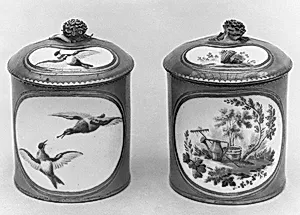
Medium
Soft-paste porcelain
Dimensions
Height: 2 5/8 in. (6.7 cm)
Classification
Ceramics-Porcelain
Culture
French, Sèvres
Department
European Sculpture and Decorative Arts
Museum
Metropolitan Museum of Art, New York, NY
Credit
Gift of R. Thornton Wilson, in memory of Florence Ellsworth Wilson, 1950
Accession Number
50.211.154a, b
Rights
Public Domain
Tags
Art Historical Context
This delicate pomade jar, one of a pair crafted by the renowned Sèvres Manuf in 1756, the height of French porcelain artistry during the Rococo era. Founded that very year as the royal factory under Louis XV, Sèvres quickly became Europe's premier producer of luxury ceramics, blending technical innovation with opulent design. Made from soft-paste porcelain—a French specialty before hard-paste techniques were mastered—this petite vessel (just 2⅝ inches tall) was likely part of an elegant toilette set for applying scented hair pomade, a staple of 18th-century aristocratic grooming. Adorned with vibrant hand-painted motifs of birds, flowers, and trees, the jar captures the playful, naturalistic elegance of Rococo decoration. These intricate enamels, fired at low temperatures, allowed for rich colors and fine details that mimicked nature's whimsy, reflecting the era's fascination with leisure and refinement. Sèvres' mastery of gilding and overglaze painting set it apart, making such pieces coveted status symbols at Versailles and beyond. Today, housed in The Metropolitan Museum of Art's European Sculpture and Decorative Arts Department, this jar—gifted in 1950—offers a glimpse into the opulent world of ancien régime France, where porcelain rivaled gold in prestige. A testament to Sèvres' enduring legacy, it highlights how everyday luxury items became canvases for artistic brilliance.
About the Artist
Sèvres Manufactory · 1740–present
The Sèvres Manufactory, one of Europe's premier porcelain producers, was established in 1740 as the Manufacture de Vincennes under the patronage of Queen Marie Leszczyńska, who sought to rival Meissen and Chantilly porcelains with French soft-paste innovations. Initially a private venture, it relocated to Sèvres in 1756 in a purpose-built facility designed by architect Laurent Lindet near Madame d...