
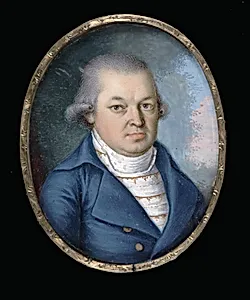
Portrait of a Gentleman
ca. 1805
Medium
Painting-Miniature
Classification
Painting-Miniature
Department
Smithsonian Collection
Museum
Smithsonian American Art Museum
Credit
Smithsonian American Art Museum, Bequest of Mary Elizabeth Spencer
Accession Number
1999.27.59.1
Rights
Public Domain
Tags
About this artwork
It is not always possible to identify the sitter in a miniature portrait, and research is still being done on some of the works in the Museum’s collection. Miniatures became popular in England during the early 1700s, commissioned by wealthy families on the occasions of births, engagements, weddings, and bereavements. These paintings, elaborately set into lockets or brooches, provided the wearer with a sentimental connection to a loved one. The back of the miniature often revealed a lock of the s...
Art Historical Context
This delicate *Portrait of a Gentleman*, created around 1805, captures the bust of an unidentified sitter in the intimate scale typical of miniature paintings. Housed in the Smithsonian American Museum through the bequest of Mary Elizabeth Spencer this work exemplifies the precision and elegance of early 19th-century portrait mini, often rendered in watercolor on ivory for their luminous quality and portability. Miniatures like this one surged in popularity in England from the early 1700s, commissioned by affluent families to commemorate births, engagements, weddings, or losses. Elaborately framed in lockets or brooches, they offered a wearable token of affection, with many featuring a lock of the sitter's hair on the reverse as a poignant symbol of intimacy or remembrance. Though the artist's identity remains elusive—and research continues—this piece reflects the era's demand for highly personal, sentimental art. The advent of the daguerreotype in 1839 provided a quicker, more affordable alternative, diminishing the miniature's dominance. Yet, these tiny masterpieces endure as windows into private emotions and social customs, inviting us to ponder the gentleman's story and the loved ones who cherished his likeness.
About the Artist
Unidentified ( ) · –