
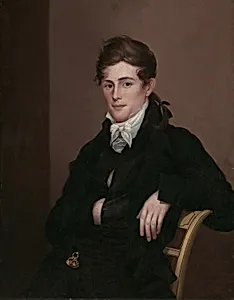
Portrait of a Gentleman
1817
Medium
Painting
Classification
Painting
Department
Smithsonian Collection
Museum
Smithsonian American Art Museum
Credit
Smithsonian American Art Museum, Gift from the Trustees of the Corcoran Gallery of Art (Museum Purchase, Gallery Fund)
Accession Number
2020.20.234
Rights
Public Domain
Tags
Art Historical Context
Step into the elegant world of early 19th-century America with *Portrait of a Gentleman* by James Peale, in 1817. James Peale, a prominent member of the influential Peale family of artists—brother to the famed Charles Willson Peale a master of portraiture during the Federal period. This oil painting captures the poised dignity of its unidentified male subject, reflecting the era's emphasis on personal status and civic virtue in a young republic still defining its identity after the War of 1812. Peale's style exemplifies the refined realism of American portrait painting, blending European influences like those of Gilbert Stuart with a distinctly Yankee directness. Likely rendered in oil on canvas—a favored medium for its luminous detail and durability—the work showcases his skill in rendering fabrics, expressions, and subtle lighting to convey character and prosperity. Such portraits were commissions for the emerging merchant and professional classes, serving as both family heirlooms and symbols of social ascent. Now housed in the Smithsonian American Art Museum as a gift from the Corcoran Gallery of Art, this piece offers a window into the cultural fabric of antebellum America, where art celebrated individual achievement amid national growth. A testament to Peale's enduring legacy, it invites us to ponder the gentleman's untold story.
About the Artist
James Peale · 1749–1831
James Peale was an American painter born in 1749, the younger brother of the more famous Charles Willson Peale, and a member of one of the most remarkable artistic families in the history of American art. Trained largely by his brother, James worked for many years in Charles Willson's shadow, assisting with portraits and miniatures in the Philadelphia studio before developing his own independent p...