
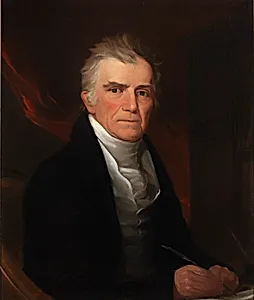
Portrait of Putnam Catlin
1840s
Medium
Painting
Classification
Painting
Department
Smithsonian Collection
Museum
Smithsonian American Art Museum
Credit
Smithsonian American Art Museum, Gift of Marjorie Catlin Roehm Stevenson
Accession Number
2013.38.1
Rights
Public Domain
Tags
Art Historical Context
Step into the world of 19th-century American portraiture with *Portrait of Putnam Catlin a compelling painting by George Catlin from the 1840s. Housed in the Smithsonian American Museum, this work—gifted by Marjorie Catlin Roehm—captures the likeness of Putnam Catlin, likely a family member, in a style showcases Catlin's keen eye for human character. As a male portrait, it exemplifies the tradition of oil painting (typical for such works), where meticulous brushwork brought sitters to life with realism and dignity. George Catlin, a pioneering artist best known for his vivid documentation of Native American tribes during his Western expeditions in the 1830s, demonstrated his versatility here. By the 1840s, back East amid America's expanding frontier spirit, Catlin turned his talents to personal subjects, blending ethnographic precision with intimate family portrayal. This piece highlights his Romantic style—characterized by detailed rendering and emotional depth—offering a glimpse into the artist's own circle. Today, *Portrait of Putnam Catlin* stands as a testament to Catlin's broader legacy in preserving American identity through art. Its presence in the Smithsonian collection invites us to appreciate not just the famous Indigenous portraits, but the everyday humanity that fueled his extraordinary career. A quiet yet powerful window into 1840s life.
About the Artist
George Catlin · 1796–1872
George Catlin (1796–1872), born in Wilkes-Barre, Pennsylvania, to Putnam Catlin and Polly Sutton—who had been captured by Native Americans during the 1778 Battle of Wyoming—initially pursued a legal career. Trained at Litchfield Law School, he was admitted to the bar in 1819 but abandoned law after two years to study art in Philadelphia in 1823. Self-taught as a portraitist, Catlin quickly gained ...