
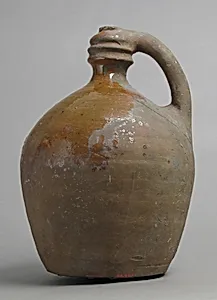
Pot, Watering
Unknown Artist
16th–17th century
Medium
Earthenware, glaze
Dimensions
Overall: 12 1/16 x 8 11/16 in. (30.7 x 22 cm)
Classification
Ceramics
Culture
British
Department
Medieval Art
Museum
Metropolitan Museum of Art, New York, NY
Credit
Rogers Fund, 1952
Accession Number
52.46.1
Rights
Public Domain
Art Historical Context
This modest earthenware watering pot, crafted in Britain during the 16th 17th century, a glimpse into everyday life during the Tudor and Stuart eras. Standing at just over 12 inches tall and 8.5 inches wide, its practical form—likely featuring a spout and handle—made it ideal for tending gardens or houseplants, a common task in households of the time. Acquired through the Rogers Fund in 1952 and housed in the Metropolitan Museum of's Medieval Art department, exemplifies the durable ceramics produced by anonymous artisans for domestic use. The pot's earthenware body, coated with a glaze, highlights early English pottery techniques that protected the clay from moisture while adding a subtle sheen. Such vessels were fired in simple kilns, reflecting the widespread craft of regional potters who supplied markets without the flourish of fine art. Though utilitarian, its survival underscores the cultural value placed on functional beauty in pre-industrial Britain, bridging medieval traditions with emerging Renaissance influences. Fun fact: Watering pots like this one were essential in the era's growing interest in ornamental gardens, inspired by continental styles and royal estates—imagine it sprinkling blooms in a countryside cottage!