
Classification
Department
Smithsonian Collection
Museum
Smithsonian American Art Museum
Credit
Gift of Eleanor and Sarah Hewitt
Accession Number
1920-36-330
Rights
Public Domain
About this artwork
Research in Progress
Art Historical Context
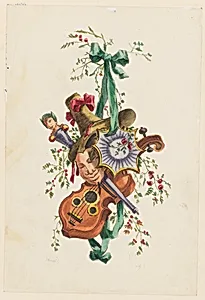
Jean-Baptiste Pillement (172–1808), a French artist of the Rococo era, was renowned for his delicate landscapes, floral motifs, and chinoiserie designs. Active across Europe—from Portugal and England to Poland—he bridged painting, tapestry design, and printmaking, influencing decorative arts during the lavish 18th century. like this one exemplify his skill in translating intricate compositions into reproducible formats, making his whimsical, nature-inspired visions accessible to a wider audience. As a print from the Smithsonian American Art Museum's collection, gifted by Eleanor and Sarah Hewitt, this work highlights Pillement's technical prowess in etching or engraving techniques typical of the period. Rococo prints often featured playful asymmetry and ornate details, reflecting the era's shift from Baroque grandeur to elegant frivolity. Though the exact date and medium remain under research, it underscores Pillement's enduring legacy in bridging fine art and design. Visitors to the Smithsonian will appreciate how such pieces preserve the tactile elegance of 18th-century European aesthetics, inviting reflection on art's role in everyday ornamentation. Ongoing research promises deeper insights into this intriguing print.