
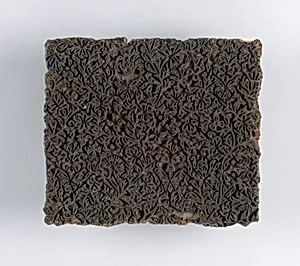
Printing block
19th century
Medium
appliances & tools
Classification
appliances & tools
Department
Smithsonian Collection
Museum
Smithsonian American Art Museum
Credit
Gift of Harvey Smith
Accession Number
1968-135-58
Rights
Public Domain
About this artwork
Research in Progress
Art Historical Context
Step into the world of 19th-century craftsmanship with this intriguing *Printing Block*, a humble yet essential tool from the Smithsonian American Art's collection. Dating to the 1800s, this exemplifies the everyday implements that powered American industry and home arts before modern machinery dominated. Donated by Harvey Smith, it highlights how such objects bridge the gap between utility and artistic expression, preserved as part of the Smithsonian's trove of cultural history. Printing blocks like this one were vital in the era's textile production, allowing artisans to transfer intricate patterns onto fabric through hand-carved relief designs inked and pressed by hand. In a time of rapid industrialization, they represented both folk traditions and emerging commercial techniques, used by printers, dyers, and homemakers alike. Though research on this specific block is ongoing, its presence in the museum underscores the artistic ingenuity embedded in America's material culture—transforming simple wood or metal into repeatable motifs that adorned clothing, wallpapers, and more. This unassuming tool invites us to appreciate the unsung heroes of design history, reminding visitors that art often begins with the tools of the trade. A testament to anonymous makers, it sparks curiosity about the hands that carved it and the patterns it once brought to life.
About the Artist
Unknown
The artist designated as "Unknown" in our virtual museum's collection exemplifies a poignant chapter in art history: creators whose identities have faded into obscurity despite the enduring power of their work. With only one known artwork attributed to them in our holdings, this figure represents countless anonymous hands that shaped visual culture across centuries. Museums worldwide, including th...