
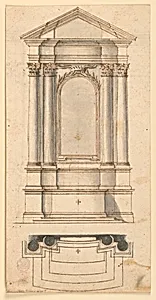
Project for an altar
1700–1750
Classification
architecture, interiors
Department
Smithsonian Collection
Museum
Smithsonian American Art Museum
Credit
Museum purchase through gift of various donors
Accession Number
1901-39-2566
Rights
Public Domain
About this artwork
Research in Progress
Art Historical Context
### Project for an Altar Step into the world of 18th-century sacred spaces with *Project for an Altar*, a captivating architectural design from 1700–1750 housed in the Smithsonian American Art Museum. Created during the colonial era, when American communities were building their first enduring houses of worship, this work likely represents a conceptual plan or drawing for a church altar—an essential focal point for religious rituals and communal gatherings. Altars of this period blended European influences like Baroque grandeur with practical adaptations to New World materials and tastes, symbolizing faith amid frontier life. Classified under architecture and interiors, the piece highlights the artistry of spatial planning, where every detail—from proportions to ornamentation—served both spiritual elevation and aesthetic harmony. Though the artist and medium remain unidentified, and research is ongoing, its presence in the Smithsonian Collection underscores its value as a rare survivor of early American design ingenuity. Acquired through a museum purchase funded by generous donors, it invites us to ponder the anonymous creators who shaped our architectural heritage. (178 words)
About the Artist
Unknown
The artist designated as "Unknown" in our virtual museum's collection exemplifies a poignant chapter in art history: creators whose identities have faded into obscurity despite the enduring power of their work. With only one known artwork attributed to them in our holdings, this figure represents countless anonymous hands that shaped visual culture across centuries. Museums worldwide, including th...