
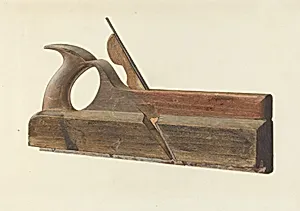
Rabbet Plane
c. 1938
Medium
watercolor, gouache, heightening, pen and ink, andcolored pencil on paperboard
Dimensions
overall: 27.9 x 35.6 cm (11 x 14 in.) Original IAD Object: 11 1/16" long, 7" high; 1 1/2" thick
Classification
Index of American Design
Department
CG-W
Museum
National Gallery of Art, Washington, D.C.
Credit
Index of American Design
Accession Number
1943.8.8081
Rights
Public Domain
Art Historical Context
**Rabbet Plane** by Samuel Faigin, created around 1938, captures the humble yet essential woodworking tool known as a rabbet plane—a specialized implement for cutting grooves or "rabbets" into edges, vital for joinery in furniture andry. Rendered at 27.9 x 35.6 cm (11 x 14 in.), this detailed study showcases the tool's classic form: 11 1/16 inches long, 7 inches high, and 1 1/2 inches thick, highlighting its sturdy iron body, wooden handles, and adjustable blade with precision and affection. As part of the *Index of American Design* (IAD), a groundbreaking WPA Federal Art Project from the Great Depression era (1935–1942), Faigin's work celebrates everyday American craftsmanship. The IAD commissioned over 18,000 watercolor renderings by artists like Faigin to document folk art, tools, and designs, preserving cultural heritage amid economic hardship and fostering national pride. Housed in the National Gallery of Art's CG-W department, it reflects how utilitarian objects embodied Yankee ingenuity. Faigin masterfully employed watercolor, gouache, heightening, pen and ink, and colored pencil on paperboard, blending fluid washes for metallic sheen with fine lines for texture. This mixed-media technique not only mimics the plane's patina and grain but elevates a workaday tool into art, inviting viewers to appreciate the artistry in America's material past.