
Rape of Proserpine
ca. 1509
Medium
Fresco, transferred to canvas and attached to wood panels
Dimensions
Overall: 31 × 31 3/4 in. (78.7 × 80.6 cm)
Classification
Paintings-Decorative
Culture
Italian, Umbria
Department
European Sculpture and Decorative Arts
Museum
Metropolitan Museum of Art, New York, NY
Credit
Rogers Fund, 1914
Accession Number
14.114.5
Rights
Public Domain
Tags
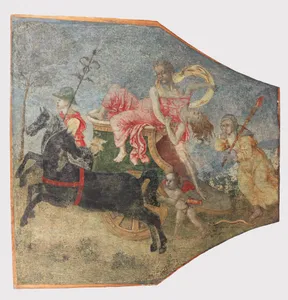
Art Historical Context
This vibrant fresco by Pinturicchio captures the dramatic abduction of Proserpine (Persephone) by Pluto, a central episode from classical mythology. Created around 1509 in Umbria, the scene shows the god of the underworld sweeping the young goddess into his chariot amid rearing horses and distressed figures, conveying both movement and emotional intensity. Pinturicchio, a leading Umbrian painter of the Renaissance, was celebrated for his luminous colors and narrative clarity, often drawing on ancient texts to bring mythological stories to life for educated patrons. Originally painted directly onto plaster as a fresco—a technique prized in Renaissance Italy for its permanence and integration with architectural spaces—this work was later transferred to canvas and mounted on wood panels, a common preservation method that allowed such pieces to be relocated and collected. Now housed in the Metropolitan Museum’s Department of European Sculpture and Decorative Arts, the compact panel likely formed part of a larger decorative cycle, reflecting the period’s fascination with classical themes and humanist learning. The inclusion of putti and dynamic chariot imagery highlights Pinturicchio’s skill in balancing lively storytelling with decorative elegance, inviting viewers to appreciate both the myth’s themes of transformation and loss and the artist’s refined Umbrian style.