
Rebirth of the Nun Anyo
Early 18th century
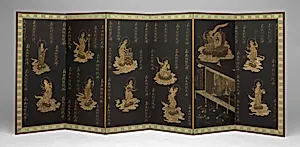
Medium
Six-panel screen (one of a pair); Ink, colors, and gold on paper
Dimensions
151.5 × 373 cm (59 5/8 × 147 in.)
Classification
screen
Department
Arts of Asia
Museum
Art Institute of Chicago
Accession Number
17191
Rights
Public Domain
Art Historical Context
Behold the exquisite *Rebirth of the Nuno*, a six-panel folding screen from early 18th-century Japan, now gracing the Arts of Asia department at the Art Institute of Chicago Measuring an impressive 151.5 373 cm, this work—one of a matching—is crafted with ink, vibrant colors, and gold on paper, embodying the opulence of Edo-period decorative arts. Japanese *byōbu* screens like this not mere furnishings but dynamic room dividers, often displayed in pairs to create immersive environments for tea ceremonies, receptions, or private contemplation. The use of gold leaf as a background creates a luminous, otherworldly glow, a hallmark technique that evokes paradise or spiritual realms, while delicate ink lines and subtle colors bring scenes to life with narrative elegance. Though the artist remains unknown, the screen's grandeur reflects the refined craftsmanship of professional workshops during Japan's peaceful Tokugawa era, when such screens became status symbols for the elite. The title hints at a Buddhist-inspired tale of transformation, celebrating themes of renewal and enlightenment central to Japanese culture. As visitors, imagine this screen unfolding in a shogun's residence, its golden hues dancing in lantern light—a testament to art's power to inspire awe and introspection across centuries.
About the Artist
Unknown
The artist designated as "Unknown" in our virtual museum's collection exemplifies a poignant chapter in art history: creators whose identities have faded into obscurity despite the enduring power of their work. With only one known artwork attributed to them in our holdings, this figure represents countless anonymous hands that shaped visual culture across centuries. Museums worldwide, including th...