
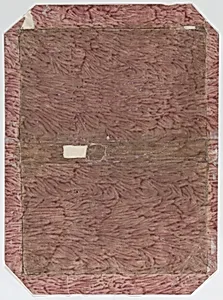
Red paste paper book cover
18th century
Medium
Paste paper
Dimensions
Sheet: 8 1/16 × 10 7/8 in. (20.4 × 27.7 cm)
Classification
Prints
Department
Drawings and Prints
Museum
Metropolitan Museum of Art, New York, NY
Credit
Harris Brisbane Dick Fund, 1926
Accession Number
26.71.9(62)
Rights
Public Domain
Art Historical Context
Step into the world of 18th-century bookbinding with this striking *Red Paste Paper Book Cover*, an anonymous masterpiece from the Metropolitan Museum of Art's Drawings and Prints collection. Crafted in the distinctive medium of paste paper, this sheet measures 8 1/16 × 10 7/8 inches (20.4 × 27.7 cm) and features vibrant red hues achieved through a hands-on technique where colored paste—mixed with pigments, dyes, and sometimes metallic flecks—is brushed onto damp paper to create swirling, marbled patterns. Acquired through the Harris Brisbane Dick Fund in 1926, it exemplifies the everyday artistry that adorned books before industrial printing dominated. Paste paper emerged in Europe during the late 17th century, particularly in Germany and France, as an affordable yet beautiful alternative to pricier marbled or block-printed papers. Artisans would comb, stipple, or swirl the paste with tools like feathers or brushes, producing unique, non-replicable designs that reflected the binder's skill and creativity. This technique not only protected book covers but also elevated humble volumes into objects of delight, bridging folk craft and fine art. Though anonymous, this cover captures the era's democratic impulse in decoration—making beauty accessible beyond elite workshops. Imagine it wrapping a leather-bound tome of philosophy or poetry, its bold red evoking passion and vitality amid Enlightenment pursuits. A testament to overlooked ingenuity, it invites us to appreciate the tactile magic of pre-industrial design.
About the Artist
Anonymous
In the vast tapestry of art history, "Anonymous" stands not as a singular individual but as a collective designation for countless unidentified creators whose works have endured across millennia. These artists, spanning prehistoric cave painters to medieval illuminators and folk craftsmen, produced the foundational layers of human visual culture. Prior to the Renaissance, when individual fame emer...