
芦雁図|Reeds and Geese
dated 11th month, 1343
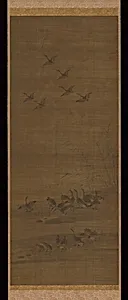
Medium
One of a pair of hanging scrolls; ink on silk
Dimensions
Image: 43 7/16 x 17 5/16 in. (110.4 x 44 cm)
Classification
Paintings
Culture & Period
Japan · Nanbokuchō period (1336–92)
Department
Asian Art
Museum
Metropolitan Museum of Art, New York, NY
Credit
Purchase, Mrs. Jackson Burke Gift, 1977
Accession Number
1977.172
Rights
Public Domain
Tags
Art Historical Context
Created during Japan’s turbulent Nanbokuchō period, *Reeds and Geese* reflects the quiet spiritual focus that Zen Buddhism brought to art in the fourteenth century. Painted by the monk-artist Tesshū Tokusai in the eleventh month of 1343, the scroll captures a simple autumn scene of geese among reeds. Such subjects offered viewers a moment of calm amid political unrest, inviting contemplation of nature’s rhythms and the passage of seasons. Executed in ink on silk as one of a pair of hanging scrolls, the work demonstrates the refined monochrome techniques favored by Japanese Zen painters of the time. The medium allows subtle gradations of tone and delicate line work, giving the geese and reeds a sense of both movement and stillness. Silk’s smooth surface further enhances the soft washes and precise brushstrokes that define this elegant composition. Today in the Metropolitan Museum’s collection, *Reeds and Geese* stands as a rare dated example of early Japanese ink painting. Its modest scale and poetic subject matter continue to speak to the enduring appeal of Zen aesthetics—finding beauty and insight in the simplest elements of the natural world.