
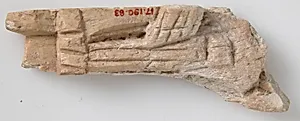
Relief Fragment with Floral Design
Unknown Artist
6th–7th century
Medium
Ivory
Dimensions
Overall: 2 1/2 x 7/8 x 3/8 in. (6.4 x 2.3 x 0.9 cm)
Classification
Ivories
Culture
Coptic
Department
Medieval Art
Museum
Metropolitan Museum of Art, New York, NY
Credit
Gift of J. Pierpont Morgan, 1917
Accession Number
17.190.83
Rights
Public Domain
Art Historical Context
This delicate *Relief Fragment with Floral Design*, from ivory in 6th–7th century Coptic Egypt, offers a glimpse into the refined artistry of early Christian craftsmen. Measuring just 2½ x 7/8 x 3/8 inches, this tiny fragment likely once adorned a larger luxury object, such as a cover, casket, or liturgical item. The intricate floral motifs, rendered in low relief, showcase the Copts' mastery of carving soft elephant ivory—a precious medium imported from Africa or India, symbolizing purity and divine beauty in medieval Christian contexts. Coptic art, blending Egyptian traditions with Greco-Roman and Byzantine influences, flourished during this Late Antique period before the Arab conquests. Ivory reliefs like this were labor-intensive feats, requiring sharp tools to incise fine details on a material prone to cracking. Floral designs evoked paradise gardens from scripture, serving both decorative and symbolic roles in monastic and ecclesiastical settings. A generous gift from financier J. Pierpont Morgan in 1917, this piece now resides in The Metropolitan Museum of Art's Medieval Art department. It reminds us of Egypt's vibrant role in early Christianity, where everyday devotion met extraordinary skill.