
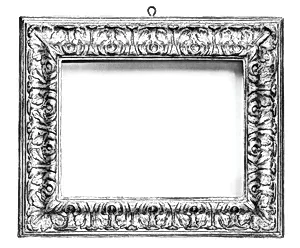
Reverse ogee frame
Unknown Artist
late 19th century (style 17th century)
Medium
Poplar
Dimensions
Overall: 18 1/2 × 22 5/8 in. (47 × 57.5 cm) Sight: 11 3/16 × 15 3/16 in. (28.4 × 38.5 cm) Rabbet: 12 1/16 × 16 1/8 in. (30.6 × 41 cm)
Classification
Frames
Culture
Southern Italy
Department
Robert Lehman Collection
Museum
Metropolitan Museum of Art, New York, NY
Credit
Robert Lehman Collection, 1975
Accession Number
1975.1.2329
Rights
Public Domain
Art Historical Context
Welcome to the Robert Lehman Collection the Metropolitan Museum of Art where this exquisite **Reverse Ogee Frame** from Southern captivates with its elegant simplicity. Crafted in the 19th century from poplar wood—a lightweight, workable hardwood favored for its fine grain—this frame measures 18½ × 22⅝ inches overall, with sight size of 11¼ × 15¼ inches, perfect for encasing a modest painting or print. Its "reverse ogee" profile a graceful, S-shaped molding that curves inward, evoking the refined lines of 17th-century Baroque frames while showcasing 19th-century revival craftsmanship. Though unsigned and by an unknown artist, this piece reflects a nostalgic trend in late 19th-century Europe, where makers revived earlier styles amid growing interest in historicism and collecting. In Southern Italy, such frames were essential complements to religious or portrait paintings, enhancing their drama through subtle contouring rather than heavy gilding. The rabbet dimensions (12 × 16 inches) indicate precise joinery techniques, ensuring a secure fit for artwork. Acquired in 1975, this frame highlights the cultural role of Southern Italian woodworkers, blending functionality with artistry. It's a reminder that frames aren't mere supports—they're sculptural frames within frames, framing our view of history itself!