
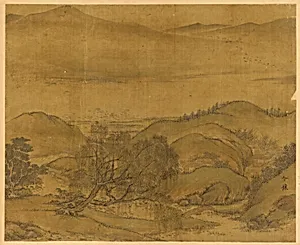
River landscape: a willow and other trees, rolling hills, and a high mountain range
1279-1644
Classification
Painting
Department
Smithsonian Collection
Museum
Smithsonian American Art Museum
Credit
Gift of Charles Lang Freer
Accession Number
F1909.246b
Rights
Public Domain
Tags
About this artwork
To 1909
Art Historical Context
This serene river landscape, featuring a graceful willow tree, lush foliage, rolling hills, and a majestic distant mountain range, exemplifies the timeless tradition of Chinese landscape painting from the Yuan (1279–1368) and (1368–1644) dynasties. Created a period when Mongol rule transitioned to native Han Chinese governance, such works captured the sublime beauty of nature, symbolizing harmony between humanity and the cosmos. Mountains often represented stability and the eternal, while winding rivers evoked the flow of life and qi (vital energy), inviting viewers to contemplate the vastness of the world. Though the artist and exact medium remain unknown, the painting's composition reflects core principles of Chinese art: vertical scrolls or hanging formats that guide the eye upward, emphasizing atmospheric perspective to convey depth and mist-shrouded infinity. Part of the renowned Charles Lang Freer collection—gifted to the Smithsonian American Art Museum—this piece arrived in the West by 1909, bridging Eastern aesthetics with global appreciation. A quiet gem of the Freer Gallery's Chinese holdings, it whispers of imperial gardens and scholarly retreats, reminding us of nature's enduring poetry.
About the Artist
Unknown
The artist designated as "Unknown" in our virtual museum's collection exemplifies a poignant chapter in art history: creators whose identities have faded into obscurity despite the enduring power of their work. With only one known artwork attributed to them in our holdings, this figure represents countless anonymous hands that shaped visual culture across centuries. Museums worldwide, including th...