
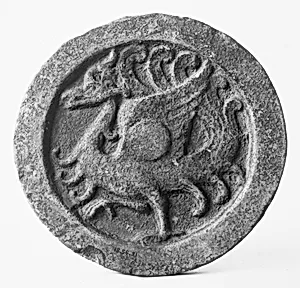
西漢 四神紋瓦當(白虎/朱雀)|Roof Tile End
Unknown Artist
Medium
Earthenware
Dimensions
Diam. 7 1/4 in. (18.4 cm)
Classification
Ceramics
Culture & Period
China · Western Han dynasty (206 B.C.–A.D. 9)
Department
Asian Art
Museum
Metropolitan Museum of Art, New York, NY
Credit
Rogers Fund, 1918
Accession Number
18.56.31
Rights
Public Domain
Tags
Art Historical Context
This exquisite earthenware roof tile end, known as a *wading* (瓦當), hails from China's Western Han dynasty (206.C.–A.D. 9), a golden age of imperial expansion and cultural flourishing. Measuring just 7¼ inches in diameter, these circular tiles adorned the eaves of grand palaces, temples, and, serving both practical and protective functions. Produced through molding techniques in kilns, they exemplify Han ceramic artistry, where everyday architecture blended with cosmology. The design features motifs from the *Four Gods* (*Si Shen*), ancient guardians of the cardinal directions: here, likely the fierce White Tiger of the West or the fiery Vermilion Bird (朱雀) of the South, evoked by bird-like tags. These mythical beasts symbolized harmony with the universe, warding off evil spirits and ensuring prosperity. In Han belief, rooted in Taoism and astronomy, they linked earthly structures to celestial order, reflecting the dynasty's obsession with immortality and divination. As a Rogers Fund acquisition at The Metropolitan Museum of Art since 1918, this artifact offers a glimpse into Han elite life—its low-fired earthenware, once vibrant with pigments, speaks to mass production for monumental building projects like Emperor Wu's opulent complexes. A humble yet profound survivor of antiquity.