
Rosette Brooch
Unknown Artist
first half 6th century
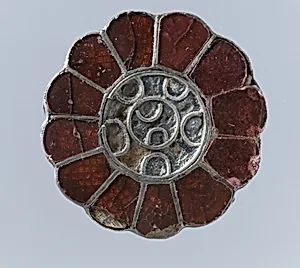
Medium
Silver-gilt, beaded filigree, garnets with silver-gilt patterned
Dimensions
Overall: 1 1/4 x 1/4 in. (3.2 x 0.7 cm)
Classification
Metalwork-Silver
Culture
Frankish
Department
Medieval Art
Museum
Metropolitan Museum of Art, New York, NY
Credit
Gift of J. Pierpont Morgan, 1917
Accession Number
17.191.201
Rights
Public Domain
Art Historical Context
This delicate **Rosette Brooch**, by an unknown Frankish in the first half of 6th century, the exquisite metalwork of early medieval Europe. Measuring just 1 1/4 x 1/4 inches (3.2 x 0.7 cm), this tiny silver-gilt jewel features a rosette design—likely a radiating floral motif—adorned with garnets set in intricate silver-gilt patterns. Housed in the Metropolitan Museum of Art's Medieval department, it was a generous gift from J.pont Morgan in 191. The brooch showcases advanced Frankish techniques like beaded filigree, where fine silver wires are twisted and beaded into ornate patterns, and garnet inlays that catch the light with vibrant red hues. Garnets were prized in Migration Period jewelry for their rarity and symbolic prestige, often reserved for elite status symbols. These methods highlight the Franks' mastery of blending Roman influences with Germanic innovation during the Merovingian era. Worn to fasten cloaks or garments, such brooches were both functional and a display of wealth among Frankish nobility amid the post-Roman world. This piece offers a glimpse into a turbulent yet artistically vibrant time, when tribal kingdoms rose and craftsmanship flourished.