
Rosette Brooch
Unknown Artist
6th century
Medium
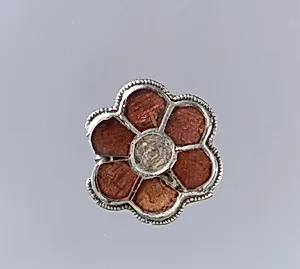
Silver-gilt, beaded filigree edging, garnets with patterned foil ...
Dimensions
Overall: 5/8 x 1/8 in. (1.6 x 0.3 cm)
Classification
Metalwork-Silver
Culture
Frankish
Department
Medieval Art
Museum
Metropolitan Museum of Art, New York, NY
Credit
Gift of J. Pierpont Morgan, 1917
Accession Number
17.192.35
Rights
Public Domain
Art Historical Context
### Rosette Brooch This delicate *Rosette Brooch*, crafted by an unknown Frankish artisan in the 6th century, exemplifies exquisite metalwork of early medieval Europe Measuring just 5/8 x 1/8 inches (1.6 x 0.3 cm), its petite rosette design—evoking a blooming flower—was likely used to fasten cloaks or garments, a practical yet luxurious accessory for the elite. Housed in the Metropolitan Museum of Art's Medieval Department (gift of J. Pierpont Morgan, 191), it reflects the Frankish culture during the Merovingian period, when Germanic tribes blended Roman influences with their own traditions after the fall of the Western Roman Empire. The brooch's medium of silver-gilt, adorned with beaded filigree edging and garnets backed by patterned foil, showcases sophisticated techniques. Silver-gilt provided a gleaming gold-like finish, while filigree—tiny twisted wires formed into beads—added intricate texture. Garnets, prized for their deep red hue enhanced by foil reflectors, were a hallmark of high-status jewelry, symbolizing wealth and artistry in a time of cultural transition. As a prime example of Frankish metalwork, this brooch highlights the era's skilled craftsmanship and trade networks sourcing precious stones from afar. Visitors can marvel at how such a tiny object encapsulated the splendor of early medieval life.