
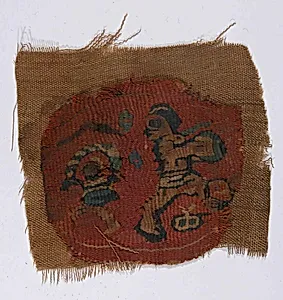
Roundel
Unknown Artist
6th century
Medium
Wool
Classification
Textiles
Department
Islamic Art
Museum
Metropolitan Museum of Art, New York, NY
Credit
Gift of Albert Eugene Gallatin, 1965
Accession Number
65.24.2
Rights
Public Domain
Tags
Art Historical Context
This exquisite 6th-century wool roundel, a circular medallion design typical of ancient textiles, hails from the early traditions now housed in the Metropolitan Museum of Art's Islamic Art department.ed by an unknown artist, it exemplifies the masterful weaving techniques of the era, where wool—durable and vibrant—was prized for garments, furnishings, and trade goods across the Near East and Central Asia. The inclusion of human figures in its motifs reflects a pre-iconoclastic phase of artistic expression, blending narrative storytelling with decorative flair. Historically, such roundels emerged in the late antique world, bridging Sasanian, Byzantine, and emerging Islamic influences during the 6th century—a pivotal time of cultural exchange along Silk Road routes. Wool textiles like this one were not just functional but symbols of wealth and craftsmanship, often produced in workshops for elite patrons or export. Donated to the Met in 1965 by Albert Eugene Gallatin, this piece offers a rare glimpse into the tactile artistry of a transformative period. Its survival underscores the resilience of textile heritage, inviting us to imagine the hands that wove it and the lives it adorned centuries ago. A testament to early figural innovation, it highlights how wool served as a canvas for human creativity long before stricter artistic conventions took hold.