
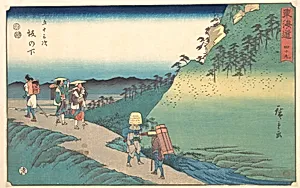
東海道五十三次 坂の下|Saka no Shita
ca. 1840
Medium
Woodblock print; ink and color on paper
Dimensions
Overall: 8 3/4 x 13 3/4in. (22.2 x 34.9cm)
Classification
Prints
Culture & Period
Japan · Edo period (1615–1868)
Department
Asian Art
Museum
Metropolitan Museum of Art, New York, NY
Credit
The Francis Lathrop Collection, Purchase, Frederick C. Hewitt Fund, 1911
Accession Number
JP799
Rights
Public Domain
Tags
Art Historical Context
Utagawa Hiroshige's *Saka no Shita* (Foot of the Slope), from his renowned series *The Fifty-three Stations of the Tōidō* (ca. 1840), captures poignant moment along Japan's historic Tōkaidō road—the vital coastal route linking Edo (modern Tokyo) Kyoto during the Edo period1615–1868). This woodblock print depicts the station at the base of a steep incline blending majestic mountains, lush trees, and tiny human figures navigating the rugged terrain. Hiroshige, a master of the ukiyo-e ("pictures of the floating world") tradition, elevated landscape printmaking with his poetic eye for nature's moods, making travel scenes accessible to everyday viewers amid Japan's growing fascination with pilgrimage and commerce. Crafted in ink and color on paper through the collaborative woodblock process—involving designers, carvers, printers, and publishers—the print's vibrant hues and subtle gradations evoke atmospheric depth, a hallmark of Hiroshige's style. Measuring about 8¾ x 13¾ inches, it exemplifies how these affordable ōban-sized sheets democratized art, influencing later Impressionists like Monet and Van Gogh. Housed in the Metropolitan Museum of Art's Asian Art collection (The Francis Lathrop Collection, 1911), *Saka no Shita* reflects Edo Japan's cultural vibrancy, where travel prints fueled wanderlust and national pride, preserving the ephemeral beauty of the journey for generations.
About the Artist
Utagawa Hiroshige · 1826–1869
Utagawa Hiroshige (1797–1858), born Andō Tokutarō, was the last great master of Japanese ukiyo-e woodblock printmaking and one of the most influential landscape artists in history. Born in Edo (modern Tokyo) into a low-ranking samurai family serving as fire wardens, Hiroshige transformed landscape printmaking into a poetic meditation on nature, weather, and everyday life. His revolutionary approac...