
San Biagio
1879-1880
Classification
Department
Smithsonian Collection
Museum
Smithsonian American Art Museum
Credit
Gift of Charles Lang Freer
Accession Number
F1908.3
Rights
Public Domain
Tags
About this artwork
4, 1
Art Historical Context
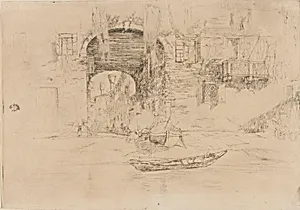
James McNeill Whistler’s *San Biagio* (1879–1880) is a captivating etching from his renowned Venice series, created during the artist’s immersive stay in the lagoon city. Whistler, an American expatriate celebrated for his Aestheticist principles—prioritizing “art for art’s sake” through subtle tones, harmony, and suggestion—produced around 50 prints during this period. This work likely captures a serene waterway scene featuring a boat, evoking Venice’s atmospheric light and misty reflections with masterful economy of line. Etching, Whistler’s preferred medium here, involves incising lines into a metal plate with acid, allowing for delicate, velvety textures that mimic the softness of fog-shrouded canals. Unlike detailed topographical views, Whistler’s approach emphasized mood over precision, influenced by Japanese prints and his own innovative “nocturnes.” *San Biagio* exemplifies this, transforming a simple boat into a poetic emblem of transience and beauty. A gift from industrialist Charles Lang Freer to the Smithsonian American Art Museum, the print joins one of the finest Whistler collections worldwide. Freer’s patronage underscores Whistler’s enduring impact on American art, bridging 19th-century realism with modernism’s focus on abstraction and sensation. Visitors will appreciate its quiet elegance, a window into Venice’s timeless allure.