
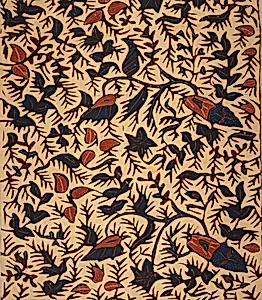
Sarong
19th century
Medium
printed, dyed & painted textiles
Classification
printed, dyed & painted textiles
Department
Smithsonian Collection
Museum
Smithsonian American Art Museum
Credit
Smithsonian American Art Museum
Accession Number
1937-93-3
Rights
Public Domain
About this artwork
Research in Progress
Art Historical Context
This 19th-century sarong, housed in the Smithsonian American Art's collection, offers a glimpse into the world of traditional textile craftsmanship. As a wrap-around garment typically worn in Southeast Asian cultures, it served both practical and aesthetic purposes, providing lightweight coverage in tropical climates while showcasing vibrant designs. Created by an unknown artist, piece reflects the era's global trade networks, where such textiles crossed continents, influencing fashion and art worldwide. The medium—printed, dyed, and painted textiles—highlights masterful techniques that brought color and pattern to life. Printing involved stamping motifs with carved blocks, dyeing immersed fabrics in natural or chemical pigments for rich hues, and painting added fine details by hand. These labor-intensive methods created durable, eye-catching fabrics prized for their complexity and beauty, often featuring geometric or floral motifs symbolizing cultural stories. Though research is ongoing, this sarong underscores the Smithsonian's commitment to preserving diverse artistic traditions. It invites us to appreciate how everyday objects like clothing embody historical ingenuity and cross-cultural exchange in the 19th century. (198 words)
About the Artist
Unknown
The artist designated as "Unknown" in our virtual museum's collection exemplifies a poignant chapter in art history: creators whose identities have faded into obscurity despite the enduring power of their work. With only one known artwork attributed to them in our holdings, this figure represents countless anonymous hands that shaped visual culture across centuries. Museums worldwide, including th...