
Satan Smiting Job with Boils
1825
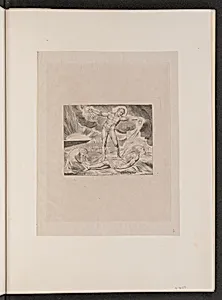
Medium
engraving on thin paper
Classification
Portfolio
Department
CG-E
Museum
National Gallery of Art, Washington, D.C.
Credit
Rosenwald Collection
Accession Number
1943.3.1674
Rights
Public Domain
Art Historical Context
William Blake's *Satan Smiting Job Boils* (1825) is a powerful engraving from his monumental series *Illustrations of the Book Job*, a set of 21 plates that blend biblical narrative with Blake's visionary mysticism. Created late in the artist's life, this work captures a pivotal moment from the Old Testament story, where Satan afflicts the righteous Job with painful boils as a test of faith. Blake, a pioneering Romantic printmaker and poet, executed the series using his innovative relief etching technique on thin paper, allowing for intricate line work and subtle tonal effects that evoke both torment and transcendence. The composition dramatically contrasts Job's suffering figure—huddled and raw with affliction—against the looming, winged form of Satan, wielding a grotesque instrument of pain. Blake's engraving style, with its bold contours and dynamic energy, reflects his belief in the divine imagination, merging spiritual allegory with human emotion. This medium was ideal for his hand-colored prints, though this example highlights the purity of line in the black-and-white state. Housed in the National Gallery of Art's Rosenwald Collection (Department CG-E), the print exemplifies Blake's enduring cultural impact, bridging Enlightenment rationalism and Romantic spirituality. Visitors are drawn to its raw intensity, inviting reflection on endurance amid adversity.
About the Artist
William Blake · 1757–1827
William Blake (1757–1827) stands as one of the most visionary and unconventional artists in British history, a poet-painter-printmaker whose mystical imagination and radical vision profoundly shaped the Romantic movement. Born in London's Soho district, Blake experienced visions from childhood—claiming to see angels in trees at age eight—and these spiritual encounters would guide his art throughou...