
Saucer
Unknown Artist
19th century
Medium
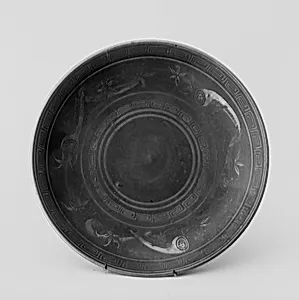
White porcelain decorated with black, silver and gold (Hizen ware, Kutani type)
Dimensions
Diam. 4 3/4 in. (12.1 cm)
Classification
Ceramics
Culture & Period
Japan · Edo (1615–1868) or Meiji period (1868–1912)
Department
Asian Art
Museum
Metropolitan Museum of Art, New York, NY
Credit
Purchase by subscription, 1879
Accession Number
79.2.1053
Rights
Public Domain
Tags
Art Historical Context
This delicate saucer, crafted in 19th-century Japan during the Edo (1615–1868) or early Meiji (1868–1912) period, exemplifies the exquisite porcelain traditions of Hizen ware in a Kutani type. Made from fine white porcelain and adorned with intricate black, silver, and gold decorations, it measures just 4 3/4 inches in diameter—perfect for serving tea or sweets in intimate settings. Hizen porcelain, produced in the Arita region of Saga Prefecture, was renowned for its technical mastery, achieved through high-fired kaolin clay and overglaze enameling techniques that allowed vibrant metallic lusters to shine without cracking the surface. The Kutani style, typically bold and colorful from Ishikawa Prefecture, influenced Hizen pieces like this one, blending regional aesthetics with export appeal. During the late Edo and Meiji eras, such wares symbolized Japan's flourishing ceramic industry, blending domestic refinement with international demand amid growing trade with the West. Acquired by subscription in 1879 for the Metropolitan Museum of Art, this saucer highlights early Western fascination with Japanese artistry, bridging East and West in the Asian Art collection. Though by an unknown artist, its subtle elegance captures the era's cultural sophistication, where everyday objects became canvases for opulent design.