
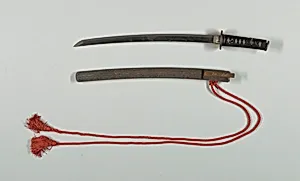
Scabbard and sword
1596–1615
Classification
metalwork
Department
Smithsonian Collection
Museum
Smithsonian American Art Museum
Credit
Gift of Anonymous Donor
Accession Number
1941-59-7-a/c
Rights
Public Domain
About this artwork
Research in Progress
Art Historical Context
Nestled in the Smithsonian American Art Museum's collection, *Scabbard and Sword (1596–1615) exemplifies the exquisite metalwork of the late Renaissance to early Baroque era. Craft by an unknown artisan, this functional yet artistic ensemble—likely a sheathed blade designed for both combat and display—reflects the period's blend of utility and ornamentation. Swords and scabbards were than weapons; they symbolized status, power, and craftsmanship among nobility and military elites during a time of exploration, conflict, and colonial expansion in Europe and the Americas. Though the precise medium and origin await further research—denoted as "Research in Progress"—its classification as metalwork hints at techniques like forging, etching, or gilding common in 17th-century workshops. Such pieces often featured intricate hilts or chased designs, turning everyday arms into heirlooms. Donated anonymously, it bridges Old World traditions with the emerging American context of the Smithsonian's holdings. This artifact invites us to ponder the lives of its makers and owners: a knight's sidearm? A diplomatic gift? Its presence in an American art museum underscores how European metalworking influenced early colonial material culture, sparking curiosity about untold stories etched in steel. (198 words)
About the Artist
Unknown
The artist designated as "Unknown" in our virtual museum's collection exemplifies a poignant chapter in art history: creators whose identities have faded into obscurity despite the enduring power of their work. With only one known artwork attributed to them in our holdings, this figure represents countless anonymous hands that shaped visual culture across centuries. Museums worldwide, including th...