
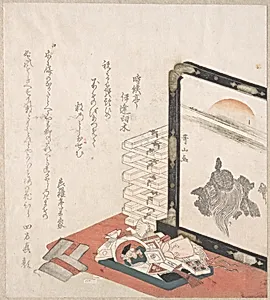
Screen and Miscellaneous New Year Presents
19th century
Medium
Woodblock print (surimono); ink and color on paper
Dimensions
8 1/4 x 7 5/16 in. (21 x 18.6 cm)
Classification
Prints
Culture
Japan
Department
Asian Art
Museum
Metropolitan Museum of Art, New York, NY
Credit
H. O. Havemeyer Collection, Bequest of Mrs. H. O. Havemeyer, 1929
Accession Number
JP2326
Rights
Public Domain
Tags
Art Historical Context
**Screen and Miscellaneous New Year Presents by Ishikawa Kazan (1785–1848) is a delightful 19th-century wood print from Japan’s late Edo period. This intimate surimono—measuring just 8¼ x 7⅜ inches—captures a still life of a folding screen adorned with elegant patterns alongside an array of New Year gifts, such as small decorative items and seasonal offerings. Crafted with ink and vibrant colors on paper, it exemplifies the refined artistry of surimono, privately commissioned prints often exchanged among poetry circles to ring in the New Year. Kazan, a master of literati painting influenced by Chinese styles and ukiyo-e traditions, infused his works with poetic elegance and meticulous detail. Surimono like this one stand out for their luxurious production techniques, including subtle embossing and rich pigmentation, making them treasured keepsakes rather than mass-produced images. The folding screen (byōbu), a hallmark of Japanese interiors, symbolizes refinement and seasonal celebration, while the gifts evoke the joy of oshōgatsu, Japan’s vibrant New Year festivities filled with family gatherings and auspicious tokens. Housed in the Metropolitan Museum of Art’s Asian Art collection as part of the H.O. Havemeyer bequest, this print offers a window into Edo-era elite culture, blending everyday festivity with artistic sophistication. Its small scale invites close contemplation, revealing Kazan’s skill in evoking warmth and harmony.