
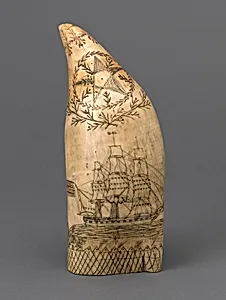
Scrimshaw
mid-19th century
Classification
sculpture
Department
Smithsonian Collection
Museum
Smithsonian American Art Museum
Credit
Gift of Anonymous Donor
Accession Number
a-a-813
Rights
Public Domain
About this artwork
Research in Progress
Art Historical Context
This exquisite piece of **Scrimshaw**, dating to the mid-19th century exemplifies a cherished tradition of American folk art born from the perilous world of whaling. Created by an unknown artist—likely a sailor aboard a whaling vessel—the work falls under the Smithsonian American Art's sculpture classification. Sailors etched intricate designs into whale teeth, bones, or ivory during long voyages, transforming utilitarian objects into personal treasures. This era marked the height of New England's whaling industry, when ships from ports like Nantucket and New Bedford roamed the world's oceans, sustaining America's economy and fueling maritime culture. Though the specific medium awaits further research, scrimshaw typically involved fine engraving tools like needles or knives, followed by inking and polishing to highlight detailed scenes of ships, anchors, patriotic motifs, or exotic animals. These carvings captured the artist's ingenuity and homesickness, serving as both skill showcases and souvenirs traded or gifted upon returning home. As a gift from an anonymous donor to the Smithsonian Collection, it preserves a tangible link to 19th-century seafaring life. Today, this artwork invites us to ponder the creativity of ordinary men in extraordinary circumstances, highlighting scrimshaw's role in documenting vanishing maritime heritage. Ongoing research promises deeper insights into its story.
About the Artist
Unknown
The artist designated as "Unknown" in our virtual museum's collection exemplifies a poignant chapter in art history: creators whose identities have faded into obscurity despite the enduring power of their work. With only one known artwork attributed to them in our holdings, this figure represents countless anonymous hands that shaped visual culture across centuries. Museums worldwide, including th...