
Seal
Unknown Artist
Medium
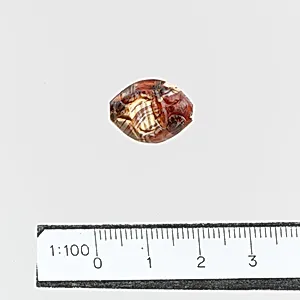
Carnelian agate (burnt)
Dimensions
Other: 1/2 x 5/8 x 1/4 in. (1.2 x 1.6 x 0.6 cm)
Classification
Gems
Culture
Minoan, Crete
Department
Greek and Roman Art
Museum
Metropolitan Museum of Art, New York, NY
Credit
Bequest of Richard B. Seager, 1926
Accession Number
26.31.227
Rights
Public Domain
Tags
Art Historical Context
This petite carnelian agate seal, measuring just 1/2 x 5/8 x 1/4 inches, the exquisite lapidary artistry of Minoan Crete. Crafted from burnt carnelian—a reddish chalcedony heated to intensify its vibrant hue—this intaglio gem was designed for stamping impressions into clay or wax Its diminutive size belies the mastery required to engrave hard stone, a hallmark of Bronze Age craftsmanship from around 3000–1100 BCE. In Minoan culture, seals like this one played vital roles in daily life and administration, serving as personal identifiers, markers for goods, or even amulets with ritual significance. They offer glimpses into a sophisticated society famed for its grand palaces at Knossos and Phaistos, intricate frescoes, and undeciphered Linear A script—often featured on these very objects. Though the exact design and date remain unknown, such gems reveal Minoan fascination with symbolism, nature motifs, and hierarchical organization. Bequeathed to the Metropolitan Museum of Art in 1926 by archaeologist Richard B. Seager, this seal connects us to Crete's enigmatic world, bridging pre-Greek civilizations and the roots of Western art. A tiny treasure, it invites wonder at how ancient Cretans encoded their stories in stone.