
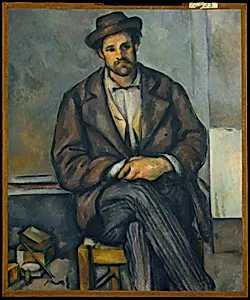
Seated Peasant
ca. 1892–96
Medium
Oil on canvas
Dimensions
21 1/2 x 17 3/4 in. (54.6 x 45.1 cm)
Classification
Paintings
Department
European Paintings
Museum
Metropolitan Museum of Art, New York, NY
Credit
The Walter H. and Leonore Annenberg Collection, Gift of Walter H. and Leonore Annenberg, 1997, Bequest of Walter H. Annenberg, 2002
Accession Number
1997.60.2
Rights
Public Domain
Tags
Art Historical Context
Paul Cézanne’s *Seated Peasant*, painted around 1892–96, captures the quiet dignity of rural life in late nineteenth-century France. Working during his mature period in Provence, Cézanne turned repeatedly to local figures, portraying them with the same seriousness once reserved for history painting. The modest oil-on-canvas format, measuring just over twenty-one inches high, invites an intimate encounter, encouraging viewers to linger over the sitter’s composed presence. Cézanne’s brushwork reveals his innovative approach to form. Rather than relying on traditional outlines, he builds the figure through layered patches of color that suggest both volume and atmosphere. This technique, characteristic of his Post-Impressionist style, bridges the spontaneity of Impressionism with the structural concerns that would later inspire Cubism. The result is a figure that feels both solidly grounded and subtly alive. Acquired by the Metropolitan Museum of Art through the Annenberg Collection, the painting exemplifies Cézanne’s enduring interest in ordinary subjects as vehicles for profound artistic exploration. Its restrained palette and contemplative mood continue to reward close looking, offering visitors a window into the artist’s patient search for harmony between man and nature.
About the Artist
Paul Cézanne · 1839–1906
Paul Cézanne (1839-1906) stands as one of the most influential figures in the history of modern art, often called the "Father of Modern Art" for his revolutionary approach to form, color, and pictorial space. Born in Aix-en-Provence to a wealthy banker who discouraged artistic pursuits, Cézanne rejected a legal career to pursue painting, though he remained financially dependent on his family until...