
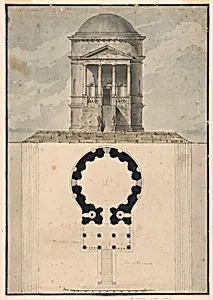
A Classical Temple
ca. 1780
Classification
architecture
Department
Smithsonian Collection
Museum
Smithsonian American Art Museum
Credit
Museum purchase through gift of various donors and from Eleanor G. Hewitt Fund
Accession Number
1938-88-7161
Rights
Public Domain
About this artwork
Research in Progress
Art Historical Context
**A Classical Temple** (ca. 1780) invites visitors into the neoclassical revival of the late 18th century a time when architects and artists across Europe and America drew inspiration from ancient Greek and Roman structures. Classified as architecture within the Smithsonian American Art Museum's collection, this work—acquired through museum purchase with gifts from various donors and the Eleanor G Hewitt Fund—likely represents design or depiction of an idealized temple, evoking symmetry, columns, and pediments that symbolized democratic ideals and civic grandeur. In the American context of the 1780s, just after independence, such classical motifs influenced early public buildings and reflected Enlightenment values of order and reason. Thomas Jefferson, for instance, championed these forms in designs like Monticello. Though the artist remains unknown and research is ongoing, the piece highlights how architectural drawings served as blueprints for cultural aspiration, blending artistic vision with practical engineering. This enigmatic artwork sparks curiosity about forgotten draftsmen of the revolutionary era, reminding us how classical echoes shaped modern landscapes. (178 words)
About the Artist
Unknown
The artist designated as "Unknown" in our virtual museum's collection exemplifies a poignant chapter in art history: creators whose identities have faded into obscurity despite the enduring power of their work. With only one known artwork attributed to them in our holdings, this figure represents countless anonymous hands that shaped visual culture across centuries. Museums worldwide, including th...