
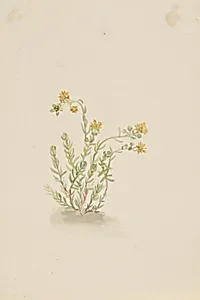
Sedum stenopetalum
ca. 1917-1918
Medium
Painting
Classification
Painting
Department
Smithsonian Collection
Museum
Smithsonian American Art Museum
Credit
Smithsonian American Art Museum, Gift of the artist
Accession Number
1970.355.70
Rights
Public Domain
Tags
Art Historical Context
Mary Vaux Walcott'sSedum stenopetal*, created around 1917-1918, is a captivating painting from the Smithsonian American Art's collection, generously gifted by the artist herself. This work depicts the narrow-petaled stonecrop, hardy wildflower native to rocky terrains, rendered with the precision characteristic of early 20th-century botanical. Walcott, a trailblazing Canadian-American artist naturalist, produced hundreds of such illustrations during expeditions across North America, blending scientific accuracy with artistic beauty. Painted amid the final years of World War I, the piece reflects Walcott's passion for documenting America's flora at a time when field science was gaining momentum. Housed in the Smithsonian Collection, it exemplifies how women like Walcott contributed to both art and botany, often accompanying her paleontologist husband on rugged trips to capture ephemeral blooms. Her technique—likely watercolor on paper—emphasizes fine details like petal veins and subtle color gradients, making the flower appear lifelike and inviting. Today, this painting invites visitors to appreciate the intersection of nature and artistry, reminding us of the quiet resilience of wild plants and the artists who immortalize them. A true gem for botany enthusiasts and art lovers alike!