
Sestertius (Coin) Portraying Emperor Severus Alexander
222-231
Medium
Bronze
Dimensions
Diam.: 2.9 cm (1 3/16 in.)
Classification
coin
Department
Arts of Greece, Rome, and Byzantium
Museum
Art Institute of Chicago
Accession Number
141727
Rights
Public Domain
About this artwork
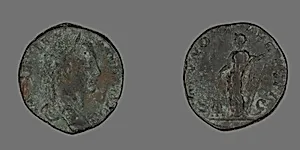
The front (obverse) of this coin portrays the head of Emperor Severus Alexander, facing to the right. On the back (reverse), the goddess Annona- the divine personification of the grain supply to the city of Rome- stands. Her right hand holds ears of grain over a modius full of grain and her left rests on an upright rudder.
Art Historical Context
Step into the world of ancient Rome with this bronze sestertius coin, struck during the reign of Emperor Severus Alexanderr. 222–235 CE). Measuring just 2.9 cm in diameter, this unassuming artifact from the Art Institute of Chicago Arts of Greece, Rome and Byzantium collection captures the youthful emperor's portrait on the obverse, likely adorned with a laurel wreath symbolizing victory and divine favor. The reverse would typically feature imperial symbols like gods, victories, or state motifs, affirming his authority amid the empire's growing instability. As a sestertius—a mid-value bronze denomination worth a quarter of a silver denarius—this coin was everyday currency for soldiers, merchants, and citizens across the vast Roman realm. Minted in vast quantities, such coins served as portable propaganda, disseminating the emperor's image far beyond Rome and reinforcing dynastic legitimacy. Severus Alexander, the last of the Severan line, ruled during the turbulent prelude to the Crisis of the Third Century, marked by military pressures from Persia and internal strife; his coins reflect an era of fragile optimism. Roman coin engraving showcased masterful die-striiking techniques, with intricate details achieved by skilled artisans using engraved metal dies hammered under high pressure. This small bronze disc, now a museum treasure, reveals how art and economy intertwined to sustain an empire.
About the Artist
Ancient Roman
The artists attributed to "Ancient Roman" in museum collections represent the anonymous craftsmen who produced the vast output of sculpture, frescoes, mosaics, and reliefs defining Roman visual culture from the Republic (c. 509–27 BCE) to the late Empire (c. 395 CE). Individual identities remain elusive, as Roman makers were typically viewed as skilled tradesmen—often enslaved Greeks or provincial...