
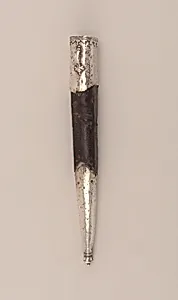
Sheath
possibly ca. 1700s
Classification
cutlery
Department
Smithsonian Collection
Museum
Smithsonian American Art Museum
Credit
The Robert L. Metzenberg Collection, gift of Eleanor L. Metzenberg
Accession Number
1985-103-101-a
Rights
Public Domain
About this artwork
Research in Progress
Art Historical Context
Nestled in the Smithsonian American Art Museum's collection this enigmatic *Sheath*—classified as cutlery— a glimpse into everyday elegance from possibly the 1700s. Donated through The Robert L. Metzen Collection by Eleanor L. Metzen, it hails from a time when finely crafted utensils were prized possessions, symbolizing refinement in colonial American households. Though the artist and medium remain unknown, presence in the Smithsonian underscores its value as a tangible link to 18th-century material culture. Cutlery sheaths like this one served practical yet artistic purposes, protecting delicate blades or organizing tableware while showcasing skilled workmanship. In an era before modern plastics or mass production, such items reflected the craftsmanship of silversmiths or woodworkers, blending utility with subtle aesthetic appeal. They often accompanied sets of knives, forks, and spoons used in formal dining, highlighting social customs around hospitality and status. Research on this piece is ongoing, inviting us to ponder its story—perhaps carried by a traveler, treasured in a wealthy home, or part of a traveler's kit. Visit the Smithsonian to see it up close and contribute to uncovering its secrets! (198 words)
About the Artist
Unknown
The artist designated as "Unknown" in our virtual museum's collection exemplifies a poignant chapter in art history: creators whose identities have faded into obscurity despite the enduring power of their work. With only one known artwork attributed to them in our holdings, this figure represents countless anonymous hands that shaped visual culture across centuries. Museums worldwide, including th...