
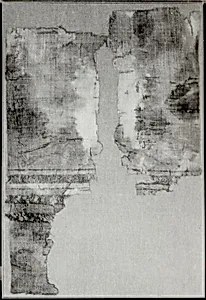
Sheet Fragment
Unknown Artist
4th century
Medium
Linen, wool
Dimensions
42 3/4 × 28 1/2 in. (108.6 × 72.4 cm) Frame (Pressure mount): 43 3/4 × 29 3/8 × 1 1/8 in. (111.1 × 74.6 × 2.9 cm)
Classification
Textiles-Woven
Culture
Coptic
Department
Medieval Art
Museum
Metropolitan Museum of Art, New York, NY
Credit
Rogers Fund, 1933
Accession Number
33.10.41
Rights
Public Domain
Art Historical Context
This striking *Sheet Fragment* from the4th century offers a glimpse into the vibrant world of early Coptic textiles, crafted in linen and wool by an unknown artist in Christian Egypt. Dating to the dawn of the Coptic era—when Egypt transitioned from pharaonic traditions to Christian influences—this piece belongs to a rich tradition of woven fabrics that adorned homes, churches, and burials. Its generous size (over 42 by 28 inches) suggests it was part of a larger household sheet, possibly for bedding or ritual use, preserved through the arid Egyptian climate. The medium showcases masterful tapestry weaving, a hallmark of Coptic artistry, where wool yarns create intricate patterns against a fine linen ground. This technique allowed for bold motifs—often geometric, floral, or symbolic of early Christian iconography—blending Hellenistic, Roman, and local Egyptian styles. Such textiles were not mere utilities but status symbols, reflecting the skill of monastic and lay weavers in workshops along the Nile. Housed in the Metropolitan Museum of Art's Medieval Art department (acquired via the Rogers Fund in 1933), this fragment highlights Coptic Egypt's pivotal role in bridging antiquity and the Middle Ages. It invites us to imagine the daily lives and spiritual devotion of a community where art and faith intertwined seamlessly.