
Snap the Whip
1872
Medium
Oil on canvas
Dimensions
12 x 20 in. (30.5 x 50.8 cm) Framed: 24 x 32 x 5 in. (61 x 81.3 x 12.7 cm)
Classification
Painting
Culture
American
Department
The American Wing
Museum
Metropolitan Museum of Art, New York, NY
Credit
Gift of Christian A. Zabriskie, 1950
Accession Number
50.41
Rights
Public Domain
Tags
Art Historical Context
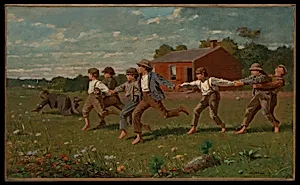
Winslow Homer’s *Snap the Whip* (1872) captures a lively moment of childhood play as a line of boys joins hands and spins across an open field. The small oil-on-canvas painting, measuring just 12 by 20 inches, distills the energy and camaraderie of a traditional American game into a compact, dynamic scene. Homer, celebrated for his realist depictions of everyday life, uses loose yet precise brushwork to suggest motion and sunlight, inviting viewers to feel the exhilaration of the children’s game. Painted in the years following the Civil War, the work reflects a broader cultural longing for innocence and renewal in rural America. Homer’s focus on boys at play underscores themes of freedom, community, and the fleeting nature of youth—subjects that resonated deeply with post-war audiences seeking reassurance in familiar, wholesome activities. Now part of the Metropolitan Museum’s American Wing, this intimate canvas exemplifies Homer’s skill at transforming ordinary moments into enduring symbols of national identity.
About the Artist
Winslow Homer · 1836–1910
Winslow Homer (1836-1910) was one of America's greatest painters and a preeminent figure in 19th-century American art. Largely self-taught, Homer began his career as a commercial illustrator and Civil War correspondent for Harper's Weekly before becoming renowned for his powerful marine subjects and landscape paintings. His mastery of both oil and watercolor, combined with his uncompromising reali...